Social Proof Ecommerce Guide: Win a Shopper's Trust Fast
Social proof ecommerce is anything that tells a new visitor that other people bought and were happy: customer reviews, customer photos, partnerships, shipping proof and, last and least, follower counts. Collect real evidence first, because numbers alone do not convince. No service guarantees sales or 100% results, so fix the basics before spending on growth.
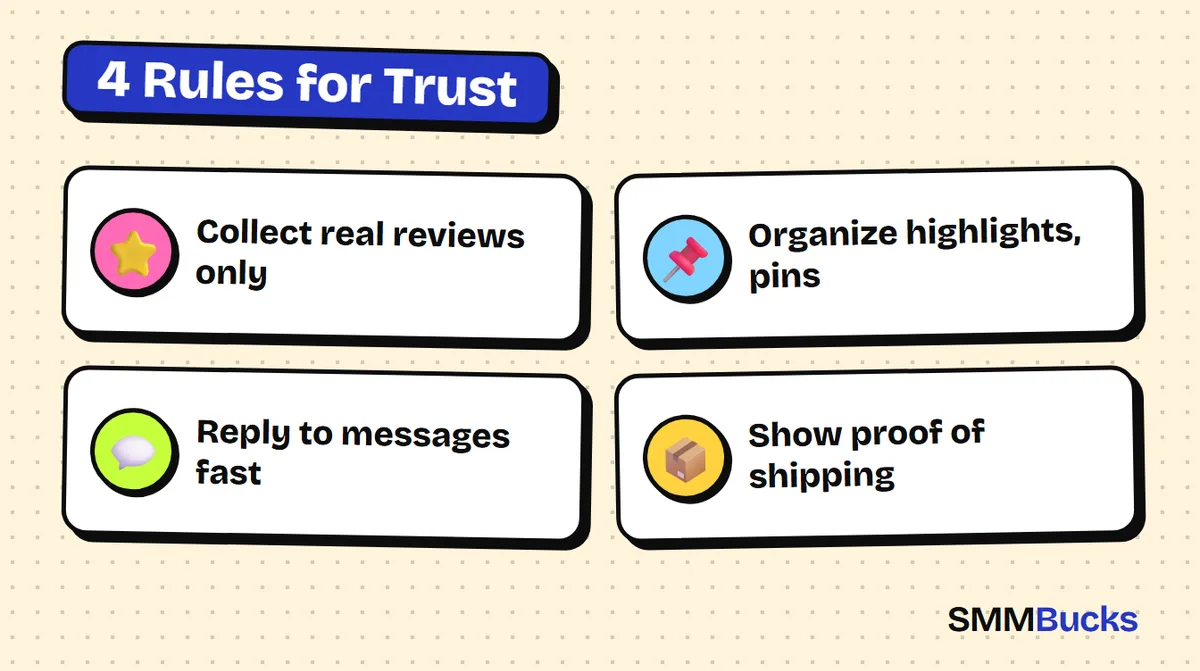
- Collect real reviews only
- Organize highlights, pins
- Reply to messages fast
- Show proof of shipping
Picture a shopper landing on your store from a Reel a friend shared. She is ready to buy but has never heard of you. She gives you a few seconds, glances at your follower count, latest post, highlights and comments, then decides: order or leave? That moment is where social proof ecommerce works for you or against you. This guide covers the types of proof, how to collect real reviews, where numbers fit, and a checklist and 14-day plan.
What is social proof ecommerce, and why does it matter for small stores?
Social proof ecommerce means showing shoppers that other people bought from you and were satisfied, so a stranger feels safe doing the same. For a small store with no history, it is often the deciding factor.
It is the habit of trusting what others have already tried, like picking a busy restaurant over an empty one. On Instagram the effect is stronger, because the shopper cannot touch the product. She looks for a signal that someone ordered and it went fine.
Tip: Social proof does not make a weak product good. It only shows what already exists. If the product or delivery is poor, no badge or number will rescue it.
Which social proof examples can your store use?
The main types are numbers, reviews and chat screenshots, customer-made content, partnerships, and shipping or business proof. You do not need all of them on day one. Start with what you have.
- Numbers: followers, likes, views. A quick first impression, but the weakest type alone.
- Reviews and chat screenshots: thank-you messages and ratings shared with permission. The strongest, because they come from someone like the visitor.
- Customer content (UGC): photos and videos customers make while unboxing or using the product.
- Partnerships: a collaboration with a creator or brand in your niche.
- Shipping proof: a trade licence if you have one, packing photos, courier receipts, a tracking number.
The harder a piece of evidence is to fake, and the closer it is to a real customer experience, the more weight it carries in social proof marketing.
How does a new visitor judge your store in seconds?
A new visitor scans your profile in a fairly fixed order, and each step builds or drains trust. Check your page the same way.
- Name and photo: do they show what kind of store this is?
- Bio: what you sell, where you ship, how to order.
- Numbers: a glance at followers and post count.
- Pinned posts: do they explain the main product and ordering?
- Highlights: are reviews and delivery info easy to find?
- Recent activity: a page silent for months looks closed.
- Comments: unanswered questions are a warning sign.
What convinces a visitor is rarely one number. It is the consistency of the whole picture, which is why social proof on Instagram is judged as a package.
How do you collect real customer reviews without feeling awkward?
Make asking part of your routine. Send a message two or three days after the order arrives, while the experience is fresh. Most happy customers never write a review simply because nobody asked.
Message template: Hi [Name], we hope your [product name] arrived safely and you like it. Your opinion helps other shoppers choose. May we share your words or a photo on our page? If anything could be better, we would love to hear it.
- Ask permission before posting any name, photo or chat, and hide personal details.
- Do not show only glowing reviews. A polite reply to criticism builds more trust than a spotless wall of praise.
- Never make a reward depend on praise. Thank customers with a small gift after they share an honest opinion, whatever it is.
Once you have a few, a customer reviews Instagram post, such as a carousel of screenshots, is easy to publish and pin.
How do you get customer photos and videos (UGC) easily?
Customers share more when the step is easy. Instead of "send us a photo", hand them a ready idea and tell them what you will do with it.
- A card in the parcel: "Film the moment you open this box, tag our store, and we will repost it with your permission."
- A store hashtag: short and easy to type.
- A tiny challenge: "How do you style it?" Ask for one photo only.
Weekly repost routine: spend half an hour checking mentions, choose three posts, ask permission, repost them in Stories and thank the customer.
How should you arrange highlights and pinned posts to build trust?
Treat highlights as the shop window of a small store. Arrange them to answer questions before the visitor asks: reviews first, then delivery, returns and how to order.
- Reviews: thank-you screenshots and delivery photos.
- Delivery: cities covered, timing you genuinely commit to, shipping cost.
- Exchange and returns: a clear policy in simple sentences, since its absence scares new buyers.
- How to order and pay: short steps with photos.
- Behind the scenes: packing and wrapping orders, which shows people work behind the account.
Pin your best seller, a collection of reviews, and a short how-to-order post. The same logic applies to social proof for website pages: put reviews and policies near the buy button, not in a footer.
Where do follower numbers fit into the picture?
Numbers catch the eye first but rarely convince alone. An account with thousands of followers and no comments, reviews or replies raises suspicion, while a small account with customers talking about their experience earns trust quickly.
So treat follower numbers as a minor supporting piece. If you decide to support your account with a starting number, services like Instagram followers at SMMBucks start from $0.46 per 1000, and each service shows its details before you order. No service guarantees 100% results or account safety.
Warning: Platforms have policies about artificial engagement. Read Instagram's official terms and decide responsibly. For the differences, see real vs fake followers.
When you don't need a growth service: if your product is not ready, you do not answer messages, or delivery is unstable. Fix the foundation first; a number cannot cover a flaw in the customer experience.
How do you build a trust path from profile to message to order?
A visitor rarely buys at first sight. She moves along a path, and trust can break at any point.
- Discovery: a Reel, post or friend's recommendation.
- Profile: bio, highlights, numbers, latest activity.
- Message: she asks about price, size or delivery. Most decisions are made here, and reply speed is the strongest proof you are serious.
- Order: she confirms payment and the shipping date.
- After delivery: a follow-up asks for her opinion, and the cycle restarts with new evidence.
Hypothetical example: a bag store replies within thirty minutes during stated working hours and lists them in the bio. It looks more professional than a store with prettier photos that answers two days later.
Checklist: is your store profile convincing?
Copy this list and answer yes or no honestly.
- Account name and photo make the store type clear.
- The bio states product, delivery areas and how to order.
- There is one clear link or order number.
- Highlights hold reviews, delivery and returns.
- Three pinned posts support the buying decision.
- You post two or three times a week.
- You answer messages within a stated time.
- Product photos are original, not copied from other stores.
- Prices are visible, or it is clear how to find them.
- You have shipping proof, with personal details hidden.
If you answered no to more than three items, start there before any campaign or spending on numbers.
What mistakes destroy trust in a small store?
- Invented reviews: made-up ratings or fake screenshots are unethical, may break platform rules, and cost you everything if exposed.
- Ignoring comments: every later visitor reads the unanswered question.
- Irregular posting: a burst of activity, then two weeks of silence.
- Promises you do not keep: announcing fast delivery, then delaying it.
- Relying on numbers alone: a big count with no evidence creates a gap visitors notice.
- Reacting emotionally to criticism: a calm reply with a clear fix turns a complaint into proof of respect.
What is your 14-day plan to build trust?
A light plan for an owner working alone. For a longer frame, read the 30-day new account plan.
- Days 1-2: audit the profile with the checklist; fix name, bio and link.
- Days 3-4: gather old thank-you messages, ask permission, hide personal details.
- Days 5-6: build highlights for reviews, delivery, returns and ordering.
- Day 7: pin best seller, reviews, how to order.
- Days 8-9: send the review request to last month's customers.
- Days 10-11: add a UGC card to parcels and start the repost routine.
- Day 12: post a behind-the-scenes Reel. More ideas in the Reels engagement guide.
- Day 13: reply to every pending comment and message.
- Day 14: compare which questions repeated, and edit highlights to answer them.
We do not promise a specific result, because sales depend on your product, price and audience. If you want to support the account number too, review the services page at SMMBucks first.
Frequently asked questions
What is social proof in marketing?
It is the effect where shoppers feel safer buying when they see that other people tried the product and were happy. It shows up as customer reviews, customer-made posts, partnerships, follower numbers and shipping proof. It cannot replace product quality, but it shortens a new visitor's hesitation, especially for a small store without an old reputation.
How do I build trust in a new Instagram store?
Start with the basics: a clear bio, highlights covering delivery and returns, pinned posts and fast replies. Then collect your first real reviews from early customers and ask permission to post them. Honesty and consistent posting matter more than big numbers at the start, and simple edits can change a first impression within about two weeks.
Is a large follower count enough to increase store sales?
Usually not. A big number catches the eye, but visitors then check comments, reviews, reply speed and your delivery policy. If those are missing, their interest may fade. Treat the number as a supporting element and complete the picture with real evidence such as reviews, delivery photos and quick replies.
How do I ask a customer for a review?
Send a short, polite message two or three days after the order arrives. Thank them first, then ask for their opinion and whether you may share it. Do not pressure them or require praise. The template in this guide is ready to copy. If they do not reply, one gentle reminder a week later is enough.
Can I use customer photos in my posts?
Always ask permission before reposting a customer's photo, chat or name. Hide personal details such as phone numbers and addresses, and tag the owner if they agree. Do not edit a photo in a way that changes its meaning, and remove anything the owner asks you to take down.
Does buying followers hurt a store's credibility?
It depends on how it is used. A number with no engagement or reviews can look suspicious, and platforms have policies on artificial engagement, so read them and decide responsibly. If you use a growth service, keep it a small part of the picture and expect no guaranteed result. Check the service description and your order history first.
Get your Instagram store front ready
Once your profile is tidy and your first real reviews are in, look at the Instagram followers services and read each service's details before you decide.
See Instagram services