What Is SaaS? The Easiest Way to Start One With No Code
SaaS (software as a service) is software you use in a browser for a subscription instead of installing it on your computer. Owners like it because the income can recur, but building one takes code, money and time. A simpler route is renting a ready-made platform and selling it under your brand. That is not owning the software, and it does not guarantee income.
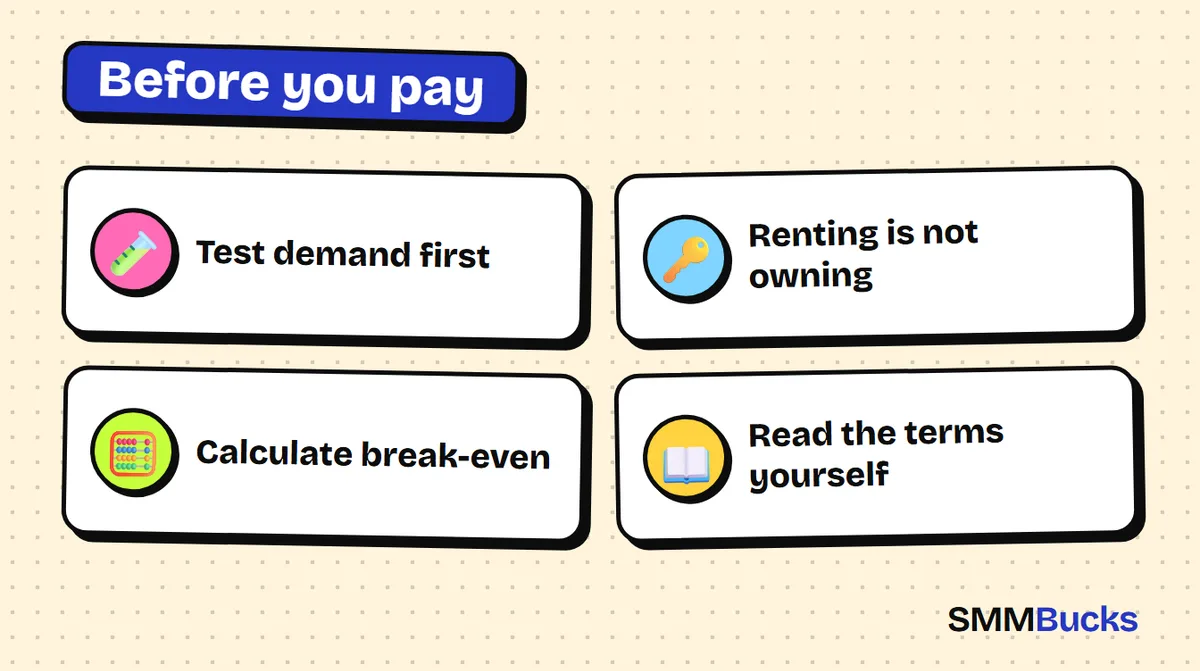
- Test demand first
- Renting is not owning
- Calculate break-even
- Read the terms yourself
You hear it everywhere: build a SaaS, earn monthly recurring revenue, run a business while you sleep. Then you wonder what is SaaS in the first place, and whether you must be a developer to own one. The honest answer is less shiny and more useful. This guide defines SaaS in one sentence, compares the ways to own one, says what a white label panel gives you and what it does not, and ends with a 7-day plan to test the idea before you pay.
What is SaaS? A one-sentence definition
SaaS is software you use through a browser or web app for a subscription, without installing it on your computer or running it yourself. The company that owns it handles the servers and updates. You log in and work. That is SaaS explained simply: usage instead of ownership. The name stands for Software as a Service.
An easy comparison: boxed software was like buying a car, a subscription is like renting one by the month. You pay for use, not ownership.
For the owner, that means income that can repeat while customers stay happy, plus a permanent duty to run the product, improve it and answer people.
What are some SaaS examples you already use?
Most people use SaaS every day without noticing. Any tool you open in the browser and pay for monthly fits the model. Here are four well-known SaaS examples, described in general terms with no figures.
- Google Workspace: email, documents and spreadsheets that run in your browser.
- Zoom: video meetings you join with a link.
- Shopify: a platform for opening an online store without building a site from scratch.
- Canva: a design tool with ready templates, running in the browser.
What they share: one product, built once, used by thousands on subscriptions.
Why does the SaaS business model attract founders?
The SaaS business model attracts founders because a satisfied customer pays again and again. You get recurring income that is easier to plan around than one-off sales, on one condition: the customer must see value every month, otherwise they cancel.
- Recurrence: monthly revenue, if customers stay.
- Scale: one product serves one customer or a hundred.
Warning: Recurring income is not passive income. The work is front-loaded, then becomes upkeep, support and marketing.
What are the usual ways to own a SaaS business?
There are three common routes: build it yourself, buy or license a ready product, or resell a ready-made platform under your own name. They differ in money, technical skill and how much you truly own.
Route one: build it yourself
Full ownership, but you need a developer, design, testing, servers and a long wait before the first customer. Many never find an audience.
Route two: buy or license a finished product
You save time, but you pay upfront or accept licence terms, and the product may not fit your market. Read your rights before paying.
Route three: resell a ready platform under your brand
This is usually called white label SaaS. You rent a working platform, put your name and prices on it, and sell to your own customers. You write no code, but you do not own the software. The next section explains why that matters.
Is a no code SaaS the same as building your own software?
No. A no code SaaS route through a ready platform is really a resale business under your brand, not ownership of software. You set the name and price and serve the customer, while the technology and updates stay with the platform owner.
It is not a flaw, but it changes your maths:
- Ownership: building gives you the code. White label gives you your brand and customer list only.
- Dependence: white label relies on the provider's terms and prices.
- Upfront cost: building costs more time and money. Reselling is usually lighter.
- The real work: either way, marketing, trust and customer service fill most of your day.
If you want the easiest online business with no capital, remember that easy means a lower barrier to entry, not a guaranteed result. Nothing is free: at minimum it costs your time.
How does the SMMBucks Child Panel fit the white label SaaS model?
The Child Panel at SMMBucks is one example of the white label model: your own panel with your own brand and domain, where you set your prices and keep the difference on each order. According to the Make Money with SMMBucks page, a panel subscription is required and separate, and results vary from person to person, so never rely on a promise of steady income.
You get a ready interface under your name, freedom to set prices, and a one-time setup according to the page. What you do not get:
- The software itself. You use a ready panel.
- An income promise. The page says its figures are illustrative estimates, not a promise of profit.
- A free subscription. Its price is not quoted here, so read it on the Child Panel page.
- Customers. Marketing, replies and follow-up are your job.
Pricing logic and a launch plan are in the Child Panel guide. If you have a website or bot, read the SMM panel API guide.
How do you choose between building, white label and reselling?
If you have a developer, a clear idea and patience, build. If you have an audience and can serve customers, go white label. If you are only testing, start with small manual resale.
Use this checklist:
- Can I write the product, or pay someone to, and wait months for a first customer?
- Do I have an audience that brings me customers today?
- Am I comfortable depending on an outside provider and its terms?
- Can I handle customer questions and order problems?
- Have I calculated break-even with my own numbers?
- Have I read the platform rules and local laws that apply to my activity?
If most answers are "I don't know", you are in the research stage, not the paying stage. That is normal.
How can you test a SaaS idea in 7 days before paying anything?
Seven days is enough to learn whether anyone wants what you plan to sell. The goal is not a big sale, it is honest answers to base a decision on.
- Day 1: define your audience, such as small shop owners or coaches, and write down one problem they have.
- Day 2: browse the services page to see what you could sell them.
- Day 3: write a three-line offer: who, what, and roughly what it costs.
- Day 4: ask five people from your audience whether they would buy, and at what price.
- Day 5: sell by hand to one person instead of building anything.
- Day 6: write down their questions and objections. This is your most valuable data.
- Day 7: calculate break-even and decide: continue, adjust, or stop.
Hypothetical example: if a platform subscription costs $30 a month and your margin is $2 per order, you need 15 orders to break even, before counting your time. These numbers are illustrative only; use your own. Results depend on audience fit, trust and consistency, and may be zero.
What mistakes do beginners make with SaaS for beginners advice?
The costliest mistakes are paying before checking demand, believing easy-income promises, and waiting for customers instead of marketing. One habit fixes them: test demand before committing money.
- Buying a subscription or licence before talking to a single customer.
- Confusing owning a brand with owning software.
- Setting prices without counting the subscription and your own time.
- Promising customers guaranteed results, when no service guarantees 100% outcomes.
- Ignoring platform policies on artificial engagement if your field is social media services.
- Skipping the disclosure when a link or commission pays you.
To judge a provider before depending on it, read the guide to choosing the best SMM server. Check local laws and each platform's rules yourself, because the decision is yours.
When is this model not right for you?
A white label model is not right if you want to own the software, expect fast income without work, or dislike answering people. In those cases, build your own product or postpone the project.
- You want to own the code and the whole product.
- You have no audience and no plan to build one.
- You cannot carry a monthly subscription that may earn nothing at first.
For a lighter option with an audience, see the referral programme on the affiliate page, which needs no capital according to that page. Its results also depend on your audience and their trust.
What is the next step after learning what SaaS is?
The next step is to do Day 1 of the 7-day plan only: write down who your audience is and what problem they would pay to solve. It costs nothing and turns a vague idea into a specific question.
Then read the Child Panel page and note your questions about its terms, and check the FAQ to see how orders work. New to the vocabulary? What an SMM panel is lays the foundation. With SMMBucks you can also sign up and try the services before any bigger commitment.
Frequently asked questions
What is SaaS in simple words?
SaaS is software you use online for a subscription, without installing it or running its servers. The owner handles hosting and updates while you log in and use it. Familiar examples are email, design, meeting and online store tools. It rests on using software rather than owning it.
Do I need to code to own a SaaS business?
To build your own software, yes: you need to code it or pay someone to. Reselling a ready-made platform under your brand needs no code, but in that case you do not own the software. Know the difference between owning a product and owning a brand before you pay.
What is the difference between SaaS and white label?
SaaS is the model of delivering software as a subscription. White label is a way of selling someone else's ready platform under your own name. With white label you are a tenant of the platform, not its owner, so you depend on the provider's terms and stay responsible to your customers.
Is a SaaS business passive income?
Not in the way it is often advertised. The work is heavy at the start, then upkeep, customer service and marketing continue. Recurring income is possible while customers stay satisfied, but it is not guaranteed and may be zero if nobody buys. Treat it as real work on a different schedule.
Does the SMMBucks Child Panel make me a SaaS owner?
No. It gives you a panel under your own brand and domain, where you set your prices and keep the difference on each order, but you do not own the software. The subscription is required and separate, and the Make Money page says results vary. Read the Child Panel page yourself before deciding.
What is the easiest online business with no capital?
No business costs absolutely nothing, because you spend your time at minimum. The lightest options usually build on an audience you already have, such as referral programmes, or on manually testing a sale before any subscription. Easy means a simpler start, not a guaranteed result.
How do I know a SaaS idea is worth it before paying?
Talk to five people from your target audience, show them a clear offer with a rough price, and try one manual sale. If nobody is interested before you have paid anything, that is valuable information that saved you money. Also calculate break-even with your own numbers.
Read before you decide
Look at the Child Panel details on SMMBucks and read its terms yourself. Then decide whether this model fits your audience and your time.
See Child Panel details